
How we help
Both of my parents need help, and they are trying to care for each other
Dad is caring for Mom, and Dad is 84. He will not admit it is too much, and you can see it in both of them. One caregiver, in one house, for two people, changes the arithmetic.
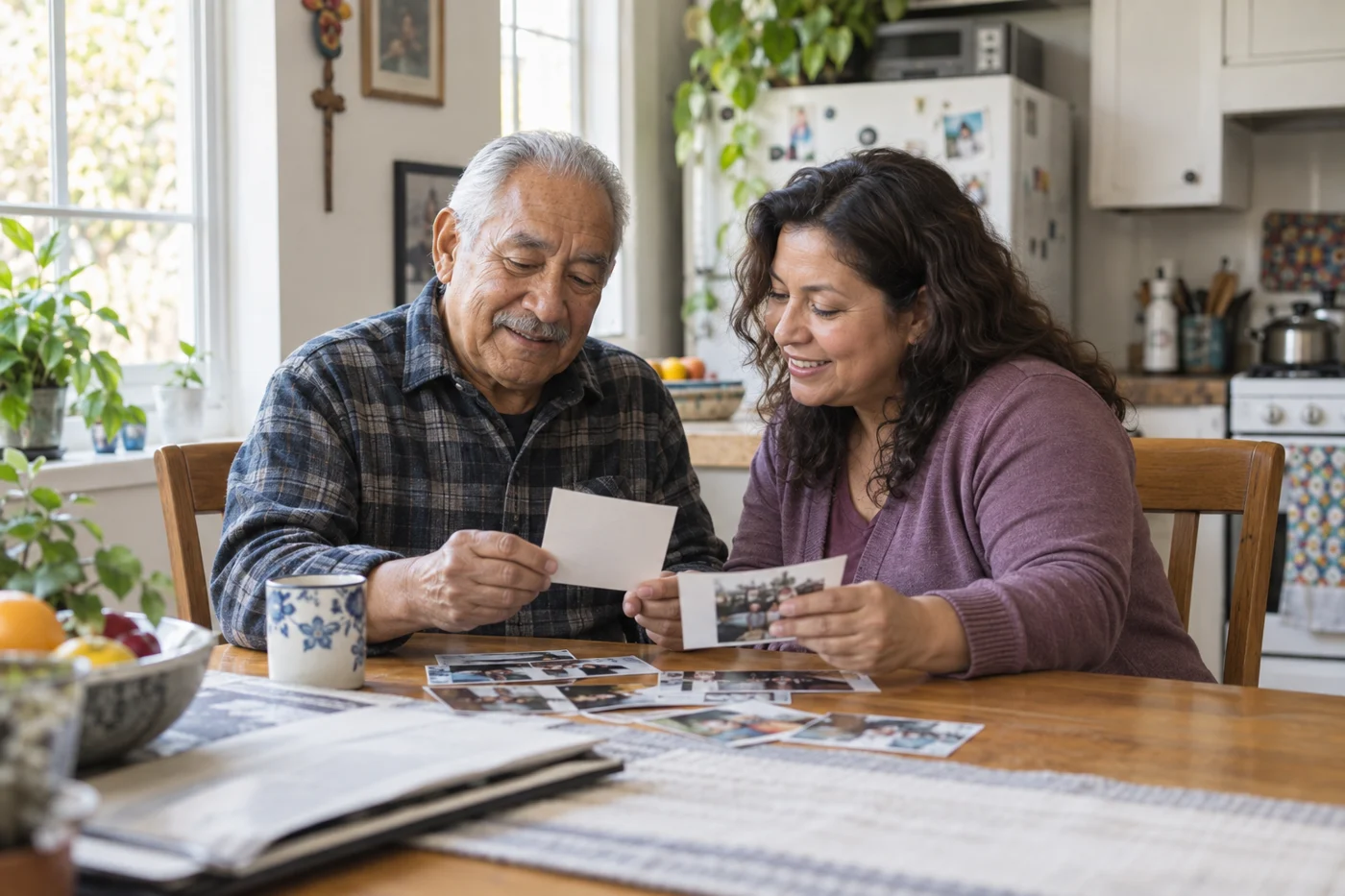

One care plan for two people, with one caregiver who knows them both.
Hands-on help for the spouse who needs it, and real rest for the spouse who has been providing it.
Meals, housekeeping, errands and rides for the household, not just one person.
A schedule built around their day, not around ours.
Why couples are different
When one spouse becomes the other’s caregiver, both decline: the one who needs help because they are getting inexpert help, and the one providing it because they are exhausted, skipping their own appointments, and lifting more than they should. Adult children see it on visits and hear denial on the phone.
One caregiver in the home a few hours a day changes both trajectories. The spouse who needs care gets trained help with bathing, dressing and mobility. The spouse who has been providing it gets to be a husband or wife again, and gets to sleep.
What a plan for a couple looks like
- Mornings, 4 hours, five days a week. Personal care for the one who needs it, breakfast for both, medications sorted for both, the house put in order, groceries and errands. The healthier spouse gets the morning off.
- Add evenings when the dinner-to-bed stretch has become hard.
- Add overnights when one spouse is up at night and the other is not sleeping. See overnight care.
Because the caregiver serves the household, the same hours do double duty: two people eat well, the house is kept, and the family gets one report instead of two.
The economics
Our comparison guide has the Pennsylvania figures.
When it is time for more
If the healthier spouse’s health fails, if one partner develops needs that require two people, or if nights become unsafe, the plan changes. We adjust hours quickly because the caregiver already knows the house and the people, and we will be honest about the point at which home is no longer the right place for one or both.
Other situations we help with
You need a break (respite)
You have not slept through the night in months. You have canceled your own doctor's appointments twice. You love them and you are running on empty. Respite is not giving up; it is how you keep going.
Dementia and memory loss
The repeated questions. The stove left on. The night you found the front door open. You want to keep them home, and you are starting to wonder how much longer you can.
After a fall
A fall changes everything in a day. Whether it ended in the ER or just a scare on the kitchen floor, the question is the same: how do we keep this from happening again without taking away their independence?
Companionship and everyday help
Since your mother lost your father, the days are long and quiet. Meals have become toast. The mail piles up. She does not need medical care. She needs a person.
Frequently asked questions
Do you charge more for two people?
My father insists he does not need help, only my mother does.
What if one of them has dementia?
Can this delay a move to assisted living?
This article is general information for Pennsylvania families and is not medical, legal, financial, or insurance advice. It's Your Home Care is a non-medical home care agency licensed by the Pennsylvania Department of Health; we do not provide skilled nursing or medical services. Program rules and eligibility change; confirm details with the agency or program named, your physician, or a qualified advisor before making decisions.
Talk to a care coordinator today
Tell us what is happening at home. We will explain your options, including what private pay, long-term care insurance, VA benefits, and Pennsylvania waiver programs may cover, and schedule an in-home care consultation when you are ready.